
How AI is Helping Us Fall Back in Love with Nature
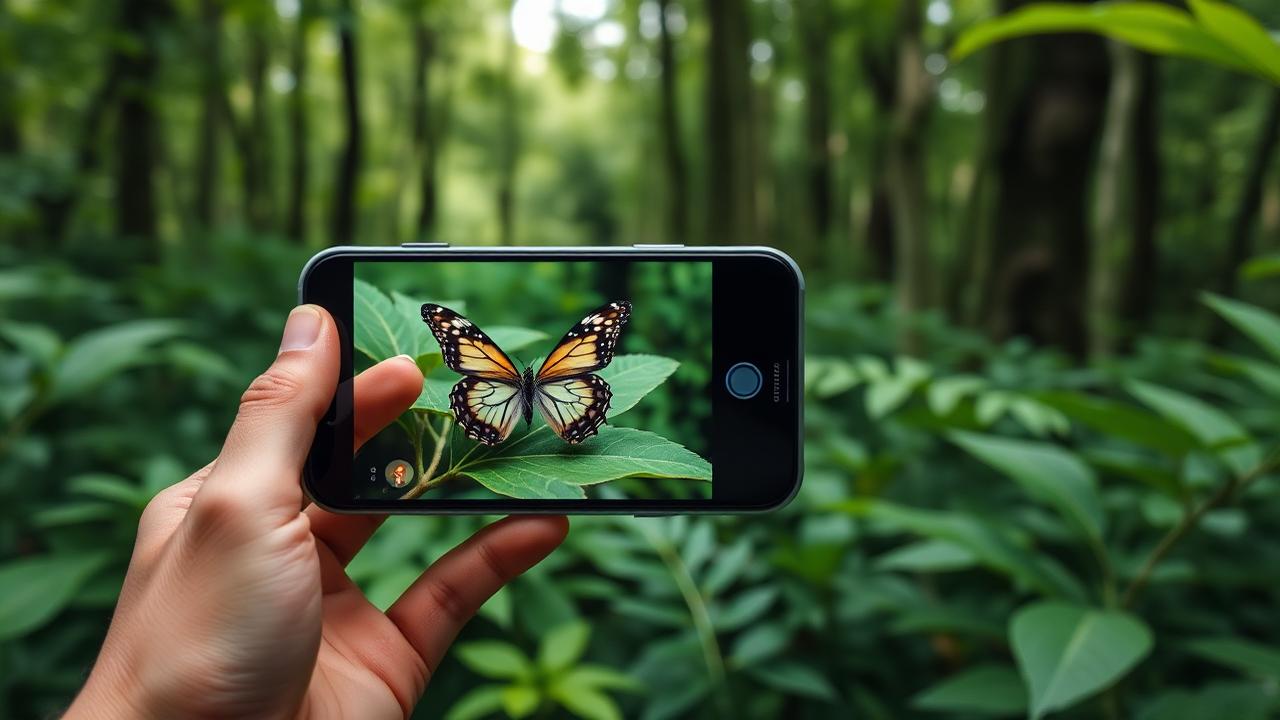
"Technology is taking us away from nature."
In many ways, that's true. We spend hours on screens, scrolling endlessly, half-present in the real world. But what if technology could actually do the opposite? What if, instead of pulling us away from nature, it could help us see it more clearly than ever before?
The Curiosity Gap
Think about the last time you spotted something interesting outdoors — an unusual insect crawling across a leaf, a plant you'd never seen before, a bird with markings you couldn't quite place. You noticed it. Maybe you even stopped for a second. And then you moved on.
Why? Because the answer wasn't easy to find. You'd have to Google it, wade through results, and by then the moment had passed. Curiosity dies when answers are hard to find. So we stop asking questions — and we stop truly seeing the world around us.
Enter AI: The World as a Classroom
AI-powered tools are quietly changing this dynamic. With nothing more than a smartphone camera, you can now: Identify an insect species in seconds. Learn the name, origin, and properties of a plant just by pointing your lens at it. Understand the role a particular bird plays in its local ecosystem. Discover whether a mushroom is edible, toxic, or rare.
What used to require a field guide, an expert, or hours of research now takes a tap. A moment that would have passed unnoticed becomes a genuine learning experience.
From Passive Scrolling to Active Exploring
There's a subtle but powerful shift happening here. Before: you're walking through a park, phone in hand, scrolling through content someone else created. Now: you're walking through the same park, phone in hand — but using it to decode the world in front of you.
Same phone. Completely different relationship with reality. Instead of consuming content endlessly, you start discovering things that are real, local, and alive. That's not a small change — that's a fundamentally different way of moving through the world.
Learning That Doesn't Feel Like Learning
The best part of AI-assisted nature exploration is that it doesn't feel like studying. There's no textbook. No quiz. No curriculum. You're just walking, observing, photographing, and asking questions — and knowledge accumulates naturally over time.
You start recognising species you've identified before. You notice patterns in where certain plants grow. You start to understand ecosystems not as abstract concepts, but as real, interconnected systems playing out right outside your door.
The Bigger Picture
This isn't just about satisfying personal curiosity. It has a larger ripple effect. When people can identify the biodiversity around them, they begin to notice it. When they notice it, they start to value it. And when they value it, they become far more likely to protect it.
Environmental apathy often comes not from not caring — but from not knowing. AI tools that make nature legible are, in a quiet way, tools for building a more environmentally conscious generation.
Final Thought
AI isn't here to replace nature or pull us further from it. It's here to lower the barrier between curiosity and understanding — to help us see what we were walking past without noticing, and to turn ordinary moments outdoors into something richer.
Maybe the most powerful thing technology can do isn't keep us glued to a screen. Maybe it's help us finally look up.
The same way AI helps you track habits on Trackzio — making progress visible and meaningful — it can make the natural world feel personal and worth paying attention to.